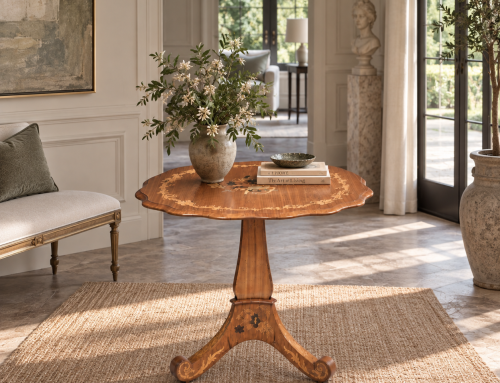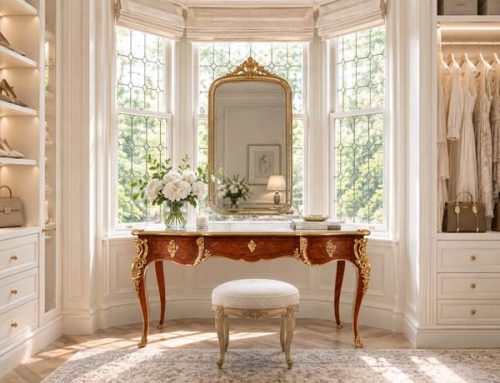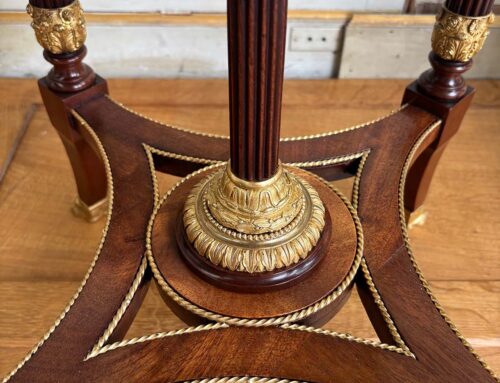

A considered approach to integrating antique furniture into modern Australian homes
A More Considered Approach to Interior Design
Understanding how to use antiques in contemporary interiors is becoming increasingly relevant for a new generation of Australian homeowners and designers. The assumption that antiques belong only in formal or old fashioned settings is steadily being replaced by something more measured—spaces that feel layered, resolved, and enduring.
Rather than creating interiors that feel assembled using a catalogue, there is a growing preference for homes that evolve over time. Antiques play a central role in this shift, introducing variation, material depth, and a sense of permanence.
Why Antiques Work in Contemporary Interiors
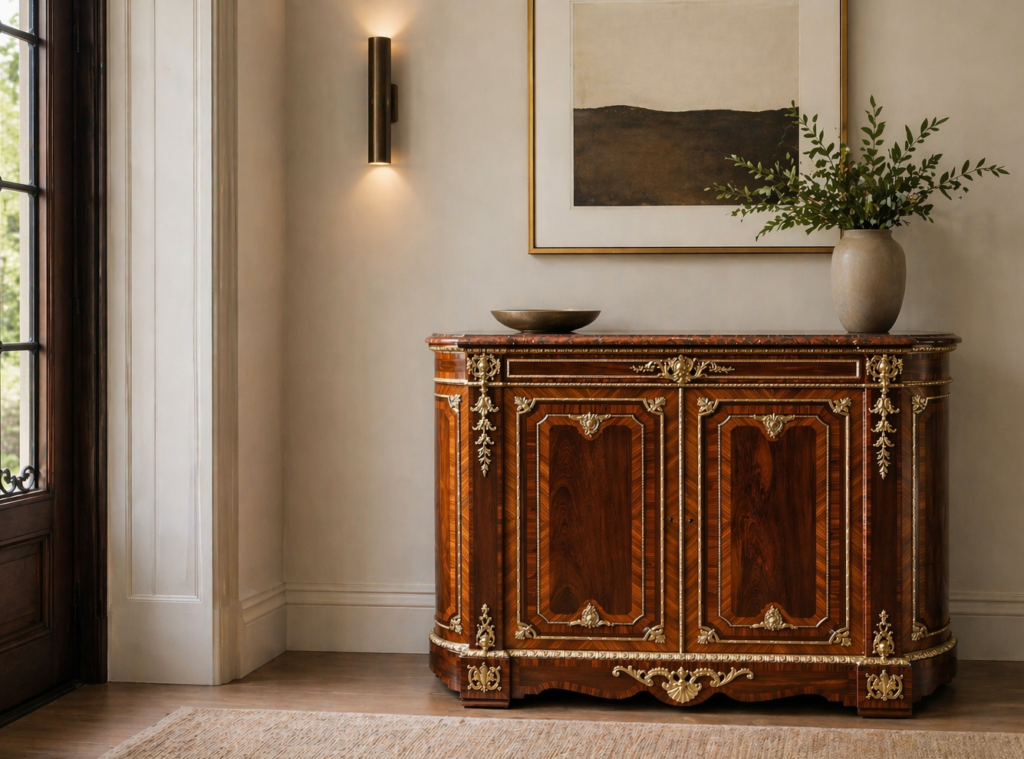
A French inlaid cabinet introducing detail and balance within a restrained contemporary setting
A well-chosen antique has the ability to anchor a room in a way newer pieces rarely achieve. In the room above, a refined 19th century French French Louis XV cabinet sits beneath a contemporary artwork, its inlay and ormolu providing contrast against a restrained backdrop. It does not compete—it settles the room.
This same principle applies at a larger scale. A substantial 19th century antique Louis XV sideboard, positioned within clean-lined joinery and surrounded by modern upholstery, introduces warmth and visual weight in the image below. Without it, the space risks feeling bland.
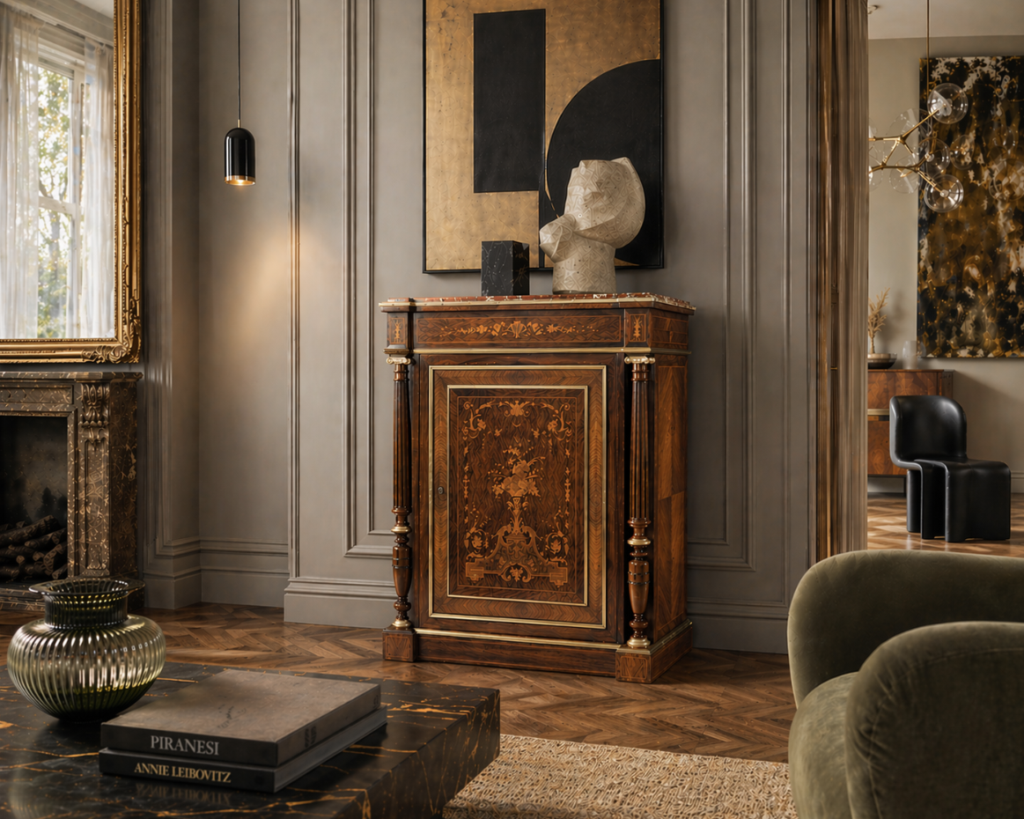
An antique sideboard adding depth and warmth to a contemporary living space defined by clean architectural lines.
Explore our collection of antique cabinets and sideboards to see how these pieces translate into contemporary interiors.
Moving Beyond Formal Rooms
Antiques are no longer confined to traditional spaces. A Louis XV cabinet placed within a hallway, set against neutral panelling and stone flooring, demonstrates how detail can elevate even transitional areas of a home, leading people from one room to another.
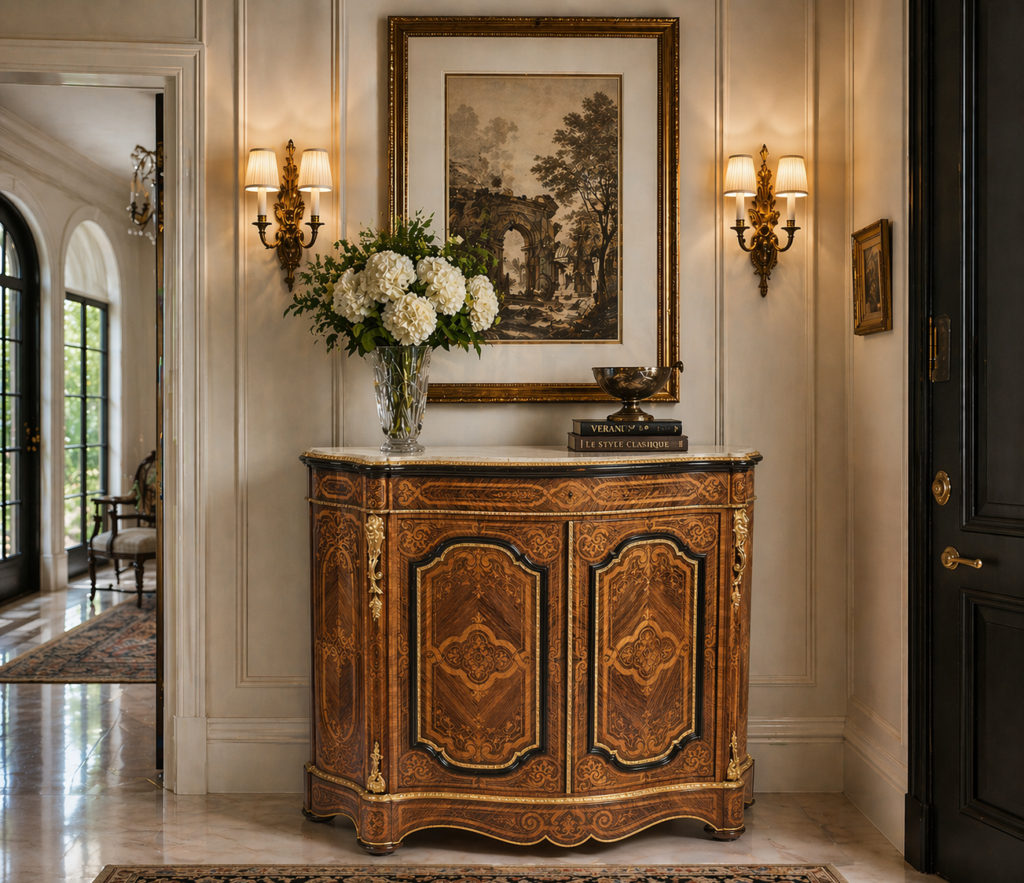
A Louis XV cabinet elevating a transitional space through proportion and fine detail.
Similarly, a smaller inlaid cabinet within a darker, more contemporary room brings focus and definition. These pieces rely less on context and more on proportion and placement.
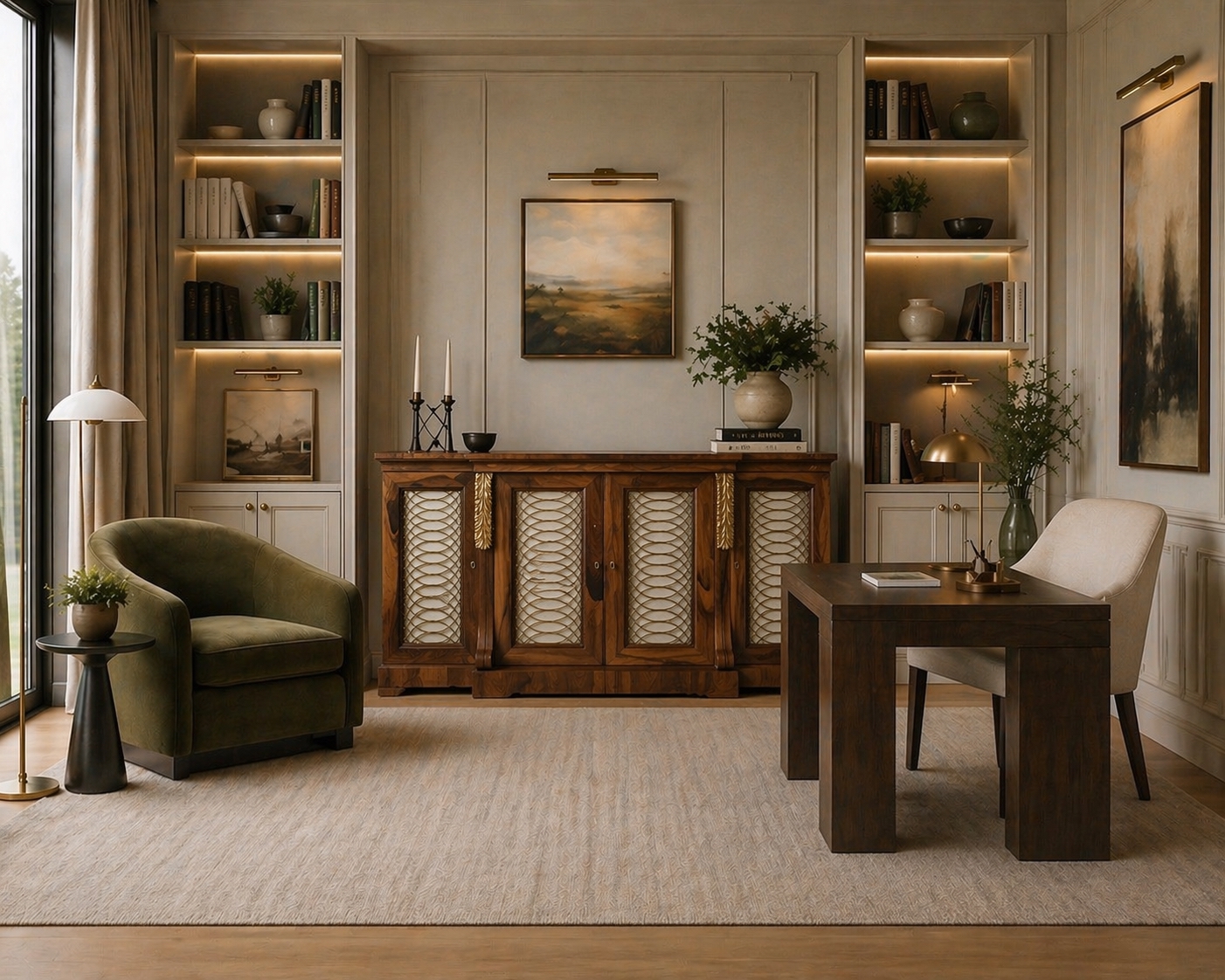
Using Antiques Architecturally
One of the more compelling approaches is to use antiques to reinforce the architecture of a space. A pair of antique pier cabinets, positioned symmetrically within a doorway, frames the room while introducing rhythm and structure.
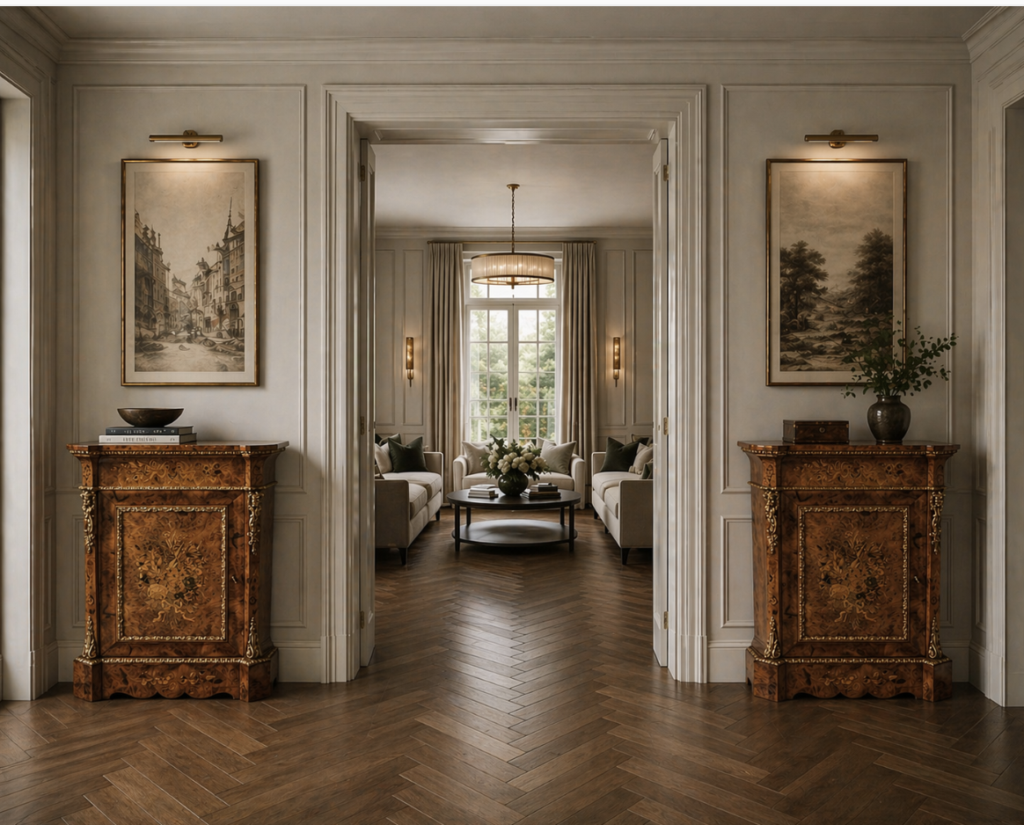
A pair of burr walnut cabinets used architecturally to frame and reinforce the space.
This is where antiques move beyond decoration. If chosen correctly, they become part of the architecture of the home—something increasingly valued by designers seeking interiors that feel intentional rather than styled.
Practicality and Scale
Versatility remains central to the appeal of antiques within various interiors. A compact commode beneath a contemporary artwork demonstrates how a single piece can define a room without excess.
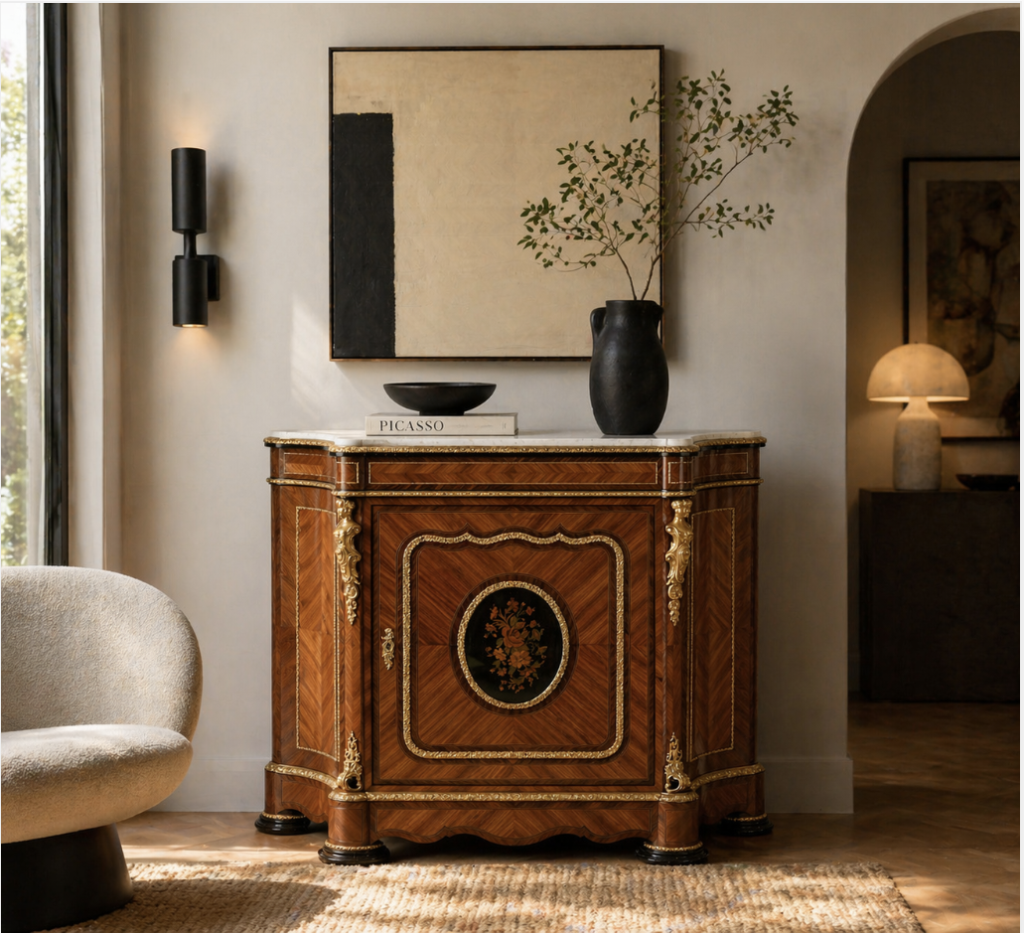
A substantial Louis XV sideboard anchoring the room while complementing a contemporary scheme
Similarly, a secrétaire chest offers both function and presence—providing storage or workspace while maintaining a refined profile. These are pieces designed to be lived with, not simply admired.
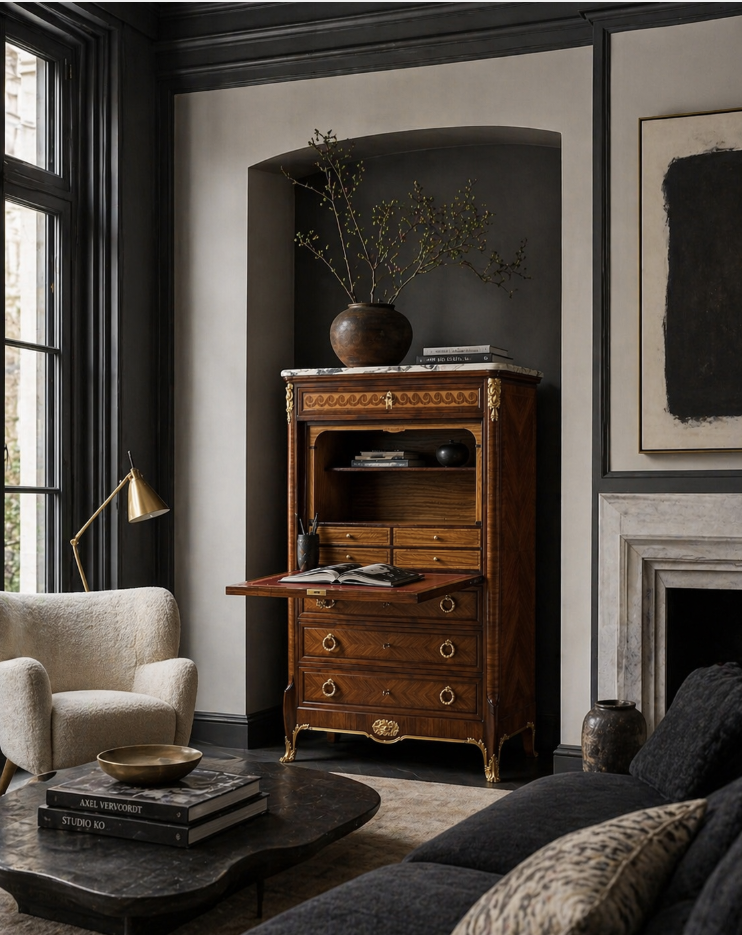
A secrétaire chest offering both function and presence within a modern interior context.
A Natural Fit for Contemporary Australian Homes
For many clients in their mid-30s to early 40s, the appeal of antique furniture lies in its ability to introduce character into otherwise clean, modern environments. Each Wallrocks piece is individually sourced, often from Europe, and selected for its quality, authenticity, and design integrity.
At Wallrocks, cabinets and sideboards are chosen in original condition, allowing clients to guide restoration in a way that suits their home and lifestyle. This level of involvement ensures the final result feels considered rather than imposed.
Creating Interiors That Feel Collected, Not Assembled
A considered interior rarely relies on one period alone. It is the relationship and juxtaposition between old and new that gives a space its depth.
Antiques, when introduced thoughtfully, do not impose formality. They introduce contrast, warmth, and a sense that the home has been created over time by someone who cares for it.
For those looking to create interiors with lasting appeal, antiques remain one of the most reliable foundations on which to do this.
Browse our collection of antique cabinets here.